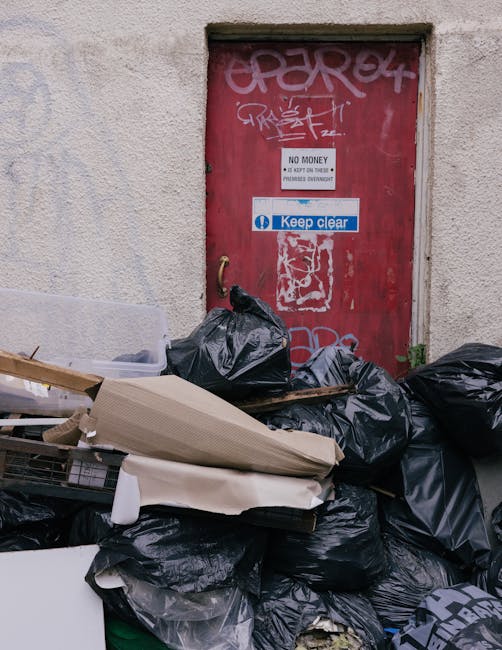
What to know about emergency rubbish pickups in Kilburn
If you suddenly need rubbish gone fast, it can feel messy in every sense of the word. Bags in the hallway, broken furniture by the kerb, a loft you can no longer walk into, or a builders' pile that has turned into a trip hazard overnight. That is where emergency rubbish pickups in Kilburn come in. They are the practical answer when waste cannot wait until next week, and you need a swift, sensible clearance without turning the whole day upside down.
In this guide, we will walk through what emergency collection actually means, how it usually works in a busy London area like Kilburn, what to expect on timing and access, where people go wrong, and how to make the process smoother. If you are comparing options, you will also find useful pointers on pricing, safety, and the kind of service standards that matter when time is tight. Truth be told, rushed jobs expose the cracks. A little preparation helps a lot.
Table of Contents
- Why emergency rubbish pickups in Kilburn matter
- How emergency rubbish pickups in Kilburn work
- Key benefits and practical advantages
- Who this is for and when it makes sense
- Step-by-step guidance
- Expert tips for better results
- Common mistakes to avoid
- Tools, resources and recommendations
- Law, compliance, standards, or best practice
- Options, methods, or comparison table
- Case study or real-world example
- Practical checklist
- Conclusion
- Frequently asked questions
Why emergency rubbish pickups in Kilburn matter
Emergency rubbish removal matters because delay often makes a small waste problem worse. In a flat, one overflowing room can block a fire exit. In a shop or office, waste in a back corridor can get in the way of staff, deliveries, or customers. On a residential street, an untidy pile can invite fly-tipping, complaints, or simply that awkward moment when neighbours start asking what is going on. Nobody wants that.
Kilburn has its own rhythm. Parking can be tight, access can be awkward, and properties vary from mansion blocks to converted flats to high-street premises. That means an urgent pickup is not just about lifting items. It is about doing it quickly, safely, and with enough planning that the job does not cause a second problem, like blocked entrances or damaged communal areas.
There is also a trust angle. When rubbish needs removing urgently, people often feel under pressure and say yes to the first available option. Fair enough, but a rushed decision can lead to unclear pricing, poor handling of bulky items, or a crew turning up without the right kit. A proper emergency service should feel calm, not chaotic.
Practical takeaway: the best emergency pickup is the one that solves the immediate problem without creating a new one. Fast is useful. Fast and controlled is better.
If you are clearing a home after a sudden event, or you are dealing with a fast-moving property issue, related services like home clearance or flat clearance may also be relevant, especially where several rooms or shared areas need attention.
How emergency rubbish pickups in Kilburn work
Most emergency rubbish pickups follow a simple pattern: you explain what needs removing, the provider assesses access and volume, then a crew comes out as quickly as possible. The exact timescale depends on availability, location, and what type of waste is involved. A same-day visit is often possible for straightforward loads, while larger or more complicated jobs may need a short scheduling window. That is normal.
Typically, the process starts with a phone call or online enquiry. You describe the items, where they are, and whether they are inside, outside, in a basement, or up several flights of stairs. A good provider will ask practical questions: Is there parking nearby? Is there a lift? Are there any heavy items, sharp materials, or access restrictions? These details matter more than people think.
On arrival, the team should confirm the load, explain the plan, and remove items efficiently. For emergency waste jobs, speed matters, but so does sorting. Reusable items, recyclable materials, and general waste may be separated if the service operates that way. If your waste includes construction debris, a dedicated builders waste clearance option may be more suitable than a standard household pickup.
In some cases, you will also see the term same-day rubbish collection or urgent waste removal. These are often used interchangeably, though the service scope can differ. One provider may focus on household waste, another on commercial clearances, and another on mixed bulky items. Ask what is included before you book. Saves hassle later.
Key benefits and practical advantages
The obvious benefit is speed. When waste has suddenly become a problem, getting it moved quickly can restore order in a matter of hours. But there is more to it than that.
- Safer access: clear hallways, stairwells, and entrances reduce trip hazards.
- Less stress: once the waste is out, the space feels usable again.
- Better presentation: important for landlords, estate agents, business premises, and shared buildings.
- Reduced neighbour friction: nobody enjoys seeing bags pile up for days.
- More controlled disposal: a professional team should know how to sort, load, and transport waste properly.
- Time saved: this is a big one, especially if you are already dealing with a move, refurb, or emergency repair.
There is also the practical benefit of avoiding the wrong sort of DIY rush. Many people underestimate how long it takes to move a sofa, clear a cupboard of mixed junk, or get building debris down a narrow staircase without scratching the wall. It looks simple until you are halfway through and sweating. Then reality arrives.
If the urgent pickup is part of a larger project, you may want to look at linked services such as furniture disposal or furniture clearance for bulky household items that need specialist handling.
Who this is for and when it makes sense
Emergency rubbish pickups are for anyone who needs fast waste removal and cannot safely or reasonably wait. That includes householders, renters, landlords, letting agents, shop owners, office managers, builders, and facilities teams. Sometimes the need is obvious. A burst pipe has soaked old belongings. Sometimes it is less dramatic. A storage room is blocked. A landlord needs a flat cleared before contractors arrive. A business has accumulated packaging and broken fixtures after a delivery issue. Same problem, different setting.
It makes sense when waste is:
- blocking access or fire exits
- causing a hygiene issue or unpleasant smell
- creating a safety hazard
- needed out before a scheduled inspection, repair, or handover
- too bulky, awkward, or heavy for normal household disposal
- mixed and hard to sort quickly on your own
In practice, people often call for emergency waste removal after a tenant move-out, a failed clear-up, a minor flood, a last-minute renovation snag, or a shop reset. It is not always a crisis in the dramatic sense. Sometimes it is simply a deadline with no wiggle room. And yes, those are the jobs where a calm team makes all the difference.
Business owners in particular may benefit from looking at business waste removal or office clearance if the issue involves desks, archive clutter, stock-room waste, or old equipment that is getting in the way of operations.
Step-by-step guidance
If you want the process to go smoothly, a little structure helps. Here is a practical way to handle it.
- Identify exactly what needs to go. Separate rubbish, bulky items, electricals, and anything potentially hazardous. Even a rough list helps.
- Check access. Note staircases, lifts, parking limits, keys, gates, and any time restrictions. In Kilburn, access can be the difference between a smooth job and a frustrating one.
- Take a few clear photos. This makes it easier for the provider to judge volume and equipment needs.
- Describe any risks. Say if there is broken glass, damp waste, sharp timber, or heavy furniture. Better to over-communicate than underdo it.
- Ask about timing. Confirm whether it is same-day, next-day, or a booked emergency slot.
- Clarify what is included. Loading, labour, transport, disposal, and cleaning up loose debris should all be discussed.
- Prepare the space. Move small items out of the way, secure pets, and keep a clear route to the waste.
- Check the final sweep. A decent team should leave the area tidy, not just empty.
That last point matters. A rushed clearance should not leave behind a trail of dust, screws, or half-broken packaging. You want the place back to normal, or at least close to it.
Expert tips for better results
Here is the sort of advice that tends to save people time and money.
Be precise about volume
"A bit of rubbish" can mean a single sack or an entire garage. If you want a sensible quote, be honest about how much there is. Overstating is not ideal, but understating is worse because it can delay the job or increase the final cost. A quick room-by-room check usually clears this up.
Prioritise access before the crew arrives
If you can reserve a parking space, unlock communal doors, or keep the route clear, do it. In older Kilburn properties, narrow hallways and shared entrances can slow everything down. The less the team has to stop and wait, the quicker the pickup tends to be.
Group items by type if you can
Separate furniture, bags, cardboard, garden cuttings, and builders' debris where practical. This is not always essential, but it can speed things up and may support better recycling outcomes. It is one of those boring little things that pays off.
Ask what cannot be taken
Some waste types need special handling or separate arrangements. If you are unsure, say so early. Nobody likes a surprise when the crew is already at the door.
Keep a backup plan for urgent deadlines
If you are clearing for a letting check, contractor visit, or business opening, leave yourself a small buffer. Even good services can be delayed by traffic, parking, or a building issue. London does London things, after all.
For odd spaces like attics, overfull storage rooms, or inherited clutter, services such as loft clearance and garage clearance can be a better fit than a general pickup. They are built for the kind of job that looks quick from the outside and is anything but.
Common mistakes to avoid
Emergency jobs go wrong in fairly predictable ways. Knowing the traps helps.
- Booking too late: if the waste is urgent, do not leave the enquiry until the last possible hour.
- Giving vague information: poor descriptions lead to poor planning.
- Ignoring access issues: stairs, loading restrictions, and parking can change the whole job.
- Assuming everything is included: always check what the service covers.
- Mixing general rubbish with problem materials: if there are hazardous or awkward items, say so.
- Choosing on price alone: the cheapest option is not always the safest or fastest.
- Forgetting communal responsibilities: in flats or shared buildings, neighbours and managing agents may need advance notice.
One particularly common mistake is treating an urgent pickup like a simple bin collection. It is usually more involved than that. Bulky items need lifting, loading, transport, and disposal. That takes manpower. Not magic.
Tools, resources and recommendations
You do not need specialist equipment to prepare for an emergency rubbish pickup, but a few simple things help a lot:
- Phone camera: take photos of the waste from several angles.
- Measuring tape: helpful for bulky items, especially furniture or awkward appliances.
- Basic gloves and sturdy shoes: useful if you are moving small bits before the team arrives.
- Notes app or checklist: keep a quick list of what needs removing and any access details.
- Bin bags or boxes: for loose bits, smaller mixed waste, or documents that need separating.
If your situation is more about a whole-property clear-out than a single urgent load, you may find house clearance or home clearance more practical. For refurbishment debris and stripped-out materials, builders waste clearance is usually the more suitable route.
And if you want to think beyond the immediate pickup, it can help to review recycling and sustainability. A good clearance service should not just make waste disappear; it should also handle materials in a responsible way where possible.
Law, compliance, standards, or best practice
When waste is being removed urgently, compliance still matters. The exact legal responsibilities depend on the type of premises, the waste category, and who produced the waste, but a few general principles are worth keeping in mind.
First, waste should only be handled and transported by people operating lawfully and safely. If you are a business, you should be extra careful about how waste is transferred and documented. If you are a landlord, managing agent, or contractor, you should also consider who is responsible for the waste at each stage. When in doubt, ask direct questions. It is not awkward. It is smart.
Second, hazardous or unusual materials need more caution than general rubbish. That can include sharp objects, contaminated items, certain electrical waste, or damp materials that have started to smell. Do not hide awkward items inside a general pile and hope for the best. That is how delays happen, and sometimes it is how accidents happen too.
Third, best practice is about safe loading, proper lifting, protecting walls and floors, and leaving the site tidy. In a crowded building or a narrow Kilburn staircase, that can be the difference between a smooth service and a minor headache. You want method, not just muscle.
If you are checking whether a provider operates with care around security and payments, you may also find it useful to review pages such as payment and security, insurance and safety, and health and safety policy. Those pages help signal how a business thinks about risk and responsibility. That reassurance matters when time is short.
Options, methods, or comparison table
Not every urgent waste problem needs the same solution. Here is a straightforward comparison to help you choose.
| Option | Best for | Strengths | Limitations |
|---|---|---|---|
| Emergency rubbish pickup | Fast removal of mixed or bulky waste | Quick response, labour included, convenient | May cost more than planned collection |
| Standard scheduled waste removal | Non-urgent waste with flexible timing | Often easier to plan, good for routine clearouts | Not suitable if the waste needs to go today |
| Furniture clearance | Sofas, beds, wardrobes, other bulky items | Handled with care, useful for heavy objects | Less suitable for mixed building debris |
| Builders waste clearance | Refurbishment and strip-out waste | Good for rubble, timber, packaging, offcuts | Not the best fit for household clutter |
| House or home clearance | Whole-room or whole-property clearances | More comprehensive, ideal for larger jobs | May be too broad if you only need a few items taken away |
To be fair, the right choice often comes down to one question: what exactly needs removing, and how quickly? If the answer is "a lot, and now," then a fast pickup makes sense. If the answer is "not much, but awkward," a more specific service could be the better fit.
Case study or real-world example
Picture a small flat in Kilburn on a Friday afternoon. A tenant has moved out, the stairwell is narrow, and the landlord discovers three bags of mixed waste, a dismantled wardrobe, and a broken desk left in the hallway. A contractor is due first thing Monday to start repairs. Not ideal.
In that kind of situation, the priority is not just removing rubbish. It is restoring access, avoiding complaints from neighbours, and giving the contractor a clear start point. The most sensible approach is usually to photograph the waste, note the floor level and access route, confirm what is bulky versus general rubbish, and arrange a quick pickup with a team that can handle both labour and disposal.
What tends to make the difference is preparation. The landlord or agent who sends clear details usually gets a smoother visit. The one who says "there's just a bit of stuff" can end up with a longer appointment than expected. Small gap, big effect.
Another common real-world example is a local office that has a failed furniture delivery and a pile of packaging, broken shelving, and a couple of old chairs waiting in a corridor. In that case, an urgent office clearance style pickup can stop the space from looking unfinished for days. Nobody wants to greet clients past a mountain of cardboard. Not exactly the vibe.
Practical checklist
Use this before booking an emergency rubbish pickup in Kilburn.
- List exactly what needs removing
- Separate bulky items from loose rubbish
- Check for sharp, heavy, damp, or unusual materials
- Take clear photos of the waste
- Measure large items if needed
- Check access, parking, stairs, and lift availability
- Confirm whether the pickup needs to be same-day or next-day
- Ask what the service includes
- Make sure communal areas are ready for safe access
- Keep pets, children, and other people away from the work area
- Confirm the final sweep before the team leaves
If you are dealing with a lot of mixed items and want a clearer quote, the pricing page can also be a helpful starting point: pricing and quotes. And if the waste is still building up or you want to talk through the details, contact us is the straightforward next step.
Get a free quote today and see how much you can save.
Conclusion
Emergency rubbish pickups in Kilburn are really about restoring control quickly. Whether the problem is a blocked hallway, a last-minute property handover, a business space that needs clearing, or an accidental mountain of waste after a hectic week, the right service should make life easier, not more complicated.
The main things to remember are simple: be clear about the waste, be honest about access, ask what is included, and choose a provider that values safety as much as speed. That combination usually leads to a much smoother experience. And if you are currently staring at a pile that feels bigger than it should, take a breath. It can be dealt with.
A tidy space has a way of easing the mind a bit, doesn't it?
Frequently Asked Questions
What counts as an emergency rubbish pickup in Kilburn?
It usually means any urgent waste removal job that cannot wait for a routine collection. That might be bulky rubbish blocking access, waste causing a safety issue, or items that need clearing before a deadline.
Can I get same-day rubbish removal in Kilburn?
Often, yes, if the provider has availability and the job is straightforward enough to schedule quickly. Same-day service is more likely when access is clear and the waste is well described.
How much notice do I need to give?
As much as you can, even if it is only a short window. A few photos and a clear description help more than people expect. If it is truly urgent, say so upfront.
What types of waste can usually be collected?
General rubbish, mixed household items, bulky furniture, garden waste, office clutter, and some construction debris are commonly handled. If you have unusual or potentially hazardous waste, mention it early.
Is emergency rubbish pickup more expensive than normal collection?
It can be, mainly because the work needs to happen quickly and may require more flexible scheduling. The exact cost depends on volume, labour, access, and the kind of items involved.
Do I need to move everything outside first?
No, not usually. Many services collect waste from inside the property, which is often the point. That said, clear access helps, and small items should be grouped if possible.
What if I live in a flat with tight stairs or no lift?
That is common in London, so it is not a problem in itself. Just be clear about floor level, stair width, and any access restrictions. Those details help the team plan properly.
Can emergency pickups help with landlord or tenant move-outs?
Yes. They are often used for end-of-tenancy clearances, quick turnarounds, and properties that need to be handed back in a usable state.
What should I ask before booking?
Ask what is included, whether the team can handle your exact waste type, how quickly they can attend, and whether they can give an upfront estimate. Also ask about insurance and safety if that matters for the property.
Do providers sort recyclable items during an emergency pickup?
Many do, though the level of sorting varies. If recycling matters to you, ask how materials are handled and whether the service follows responsible disposal practices.
What happens if the waste is larger than expected?
The team will usually reassess the load and explain any change before continuing. This is why accurate photos and descriptions matter. Nobody likes surprises mid-job, honestly.
Which service is best for a big house or full property clear-out?
If the job goes beyond a few urgent items, a more comprehensive option such as house clearance or home clearance may be better than a simple emergency pickup. It depends on scale and timing.
How do I prepare for a fast collection?
Make the route clear, separate obvious items if you can, note anything heavy or fragile, and keep pets and children away from the work area. A few minutes of prep can save a lot of back-and-forth.
Where can I learn more about your service standards?
It is sensible to review pages such as about us, insurance and safety, and recycling and sustainability to understand how the service is run and what standards it follows.